By Mo Kahlain
In short
- Andrej Karpathy sees a sharp funnel. About 6 billion people barely use AI, 20 million use frontier models at work, and 5,000 use systems inside the labs.
- The same funnel sits inside most companies. The decisions about AI often come from its wide end.
- Our quiz asks five questions and places you at one of five levels. It asks for no email and no account.
Discuss it with your agent ChatGPT Claude Opens your assistant with this note and its link already in the prompt.
Share Email it LinkedIn Post on X PDF
Andrej Karpathy on X, 11 October 2026
On 11 October, Andrej Karpathy came back to a post he wrote in April. In April he saw two groups of people talking past each other about AI. Six months later he sees "a sharp funnel", and he says the gap is widening.
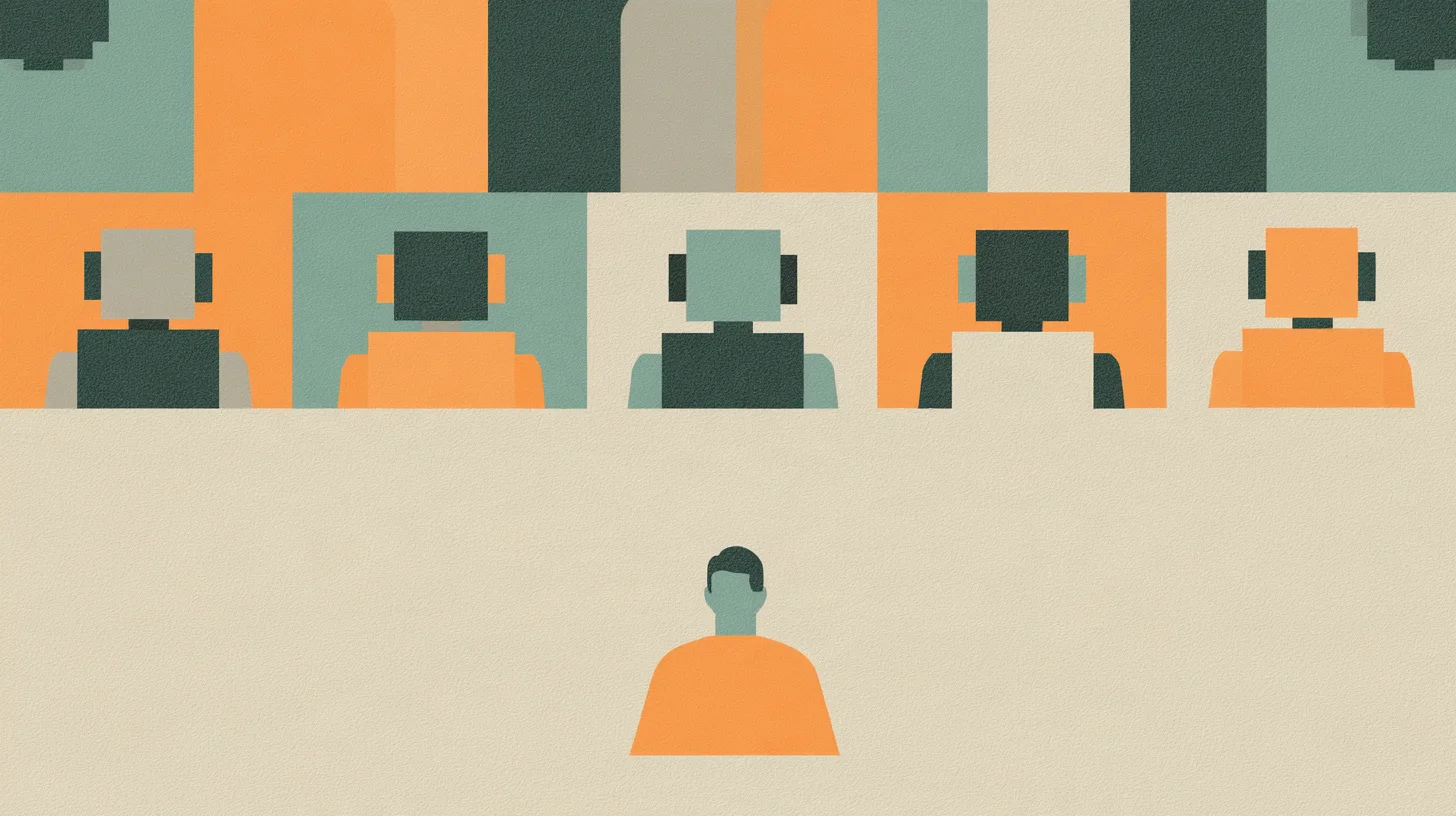
He calls his numbers napkin math. About 6 billion people have barely come in contact with a language model. One to two billion use free chat tools now and then, a bit like a better Google search or a writing aid. Around 20 million use frontier models at work in code and math. With one prompt, they see agents finish projects that used to take them weeks or months. At the narrow end, about 5,000 people use systems inside the labs that the public has not seen yet.
He names three forces behind the funnel. The first is the size of the problem you bring: a question with a one-paragraph answer barely tests the system. The second is that capability is uneven. It peaks in work that is digital and easy to check, such as code and math. The third is access, from free tier to paid tier to internal.
The line for business owners
One sentence in his post describes most of the people we meet. He puts many professionals outside math and code in the second tier, and he names executives. They spend their days talking to people, so they understand the change intellectually, but for them it is "still second-hand and a bit abstract".
The funnel describes the world. It also describes most companies. Picture a team of thirty. The owner tried a chat tool last year. A manager uses a paid version on her own files every day. Someone in operations built an automation that runs each morning, and few people know it exists. The decisions about AI (what to buy, what to allow, what to try first) often come from the wide end of the funnel.
Karpathy's point explains why. Your view of AI comes from what you have tried, and on what size of problem. Two people in the same meeting can look at the same tool and see different things. One sees a chatbot that gets a fact wrong. The other sees a week of work done in an afternoon. Both report what they saw.
Five questions to find your place
We built a short quiz so you can place yourself. It asks five questions about how you work with AI today. What do you do when a new task lands? What do you do when a similar task comes back next week? What is the last new thing you tried? What is your usual role when AI produces something? And do you have access to nonpublic systems inside a lab?
Your answers place you at one of five levels:
- Explorer. You mostly use AI as a chat.
- Collaborator. You use a work version of AI chat, on your own files and tasks.
- Builder. You may have agents and skills that run some of your workflows and tasks.
- Orchestrator. You manage a fleet of agents, and you work a lot with code.
- Frontier Insider. You see AI from the inside, before it is public.
Our levels cut Karpathy's tiers a little finer. His casual tier holds our Explorer and Collaborator. Builder sits where a professional starts to hand whole workflows to agents. Orchestrator is close to his 20 million, and Frontier Insider to his 5,000.
The result is not a score. It is a snapshot of what you report, and your understanding may go further than your answers show. It tells you what you see today, what you may not have seen yet, and one next experiment you can run. The quiz asks for no email and no account. Your answers stay in your browser tab.
Why we start here
You can't automate what you don't understand. That holds for a process, and it holds for AI. Before a company picks a tool, it helps to know where its own people sit in the funnel, starting with the person who signs off.
Then ask one colleague to take it, and compare your two results.
Get the next field note by email. Subscribe to The Signal